Open-source terminal-first DAW
ImbolcStudio
A complete audio workstation in your terminal.
Write beats, layer synthesizers, shape sounds with effects, mix tracks, record finished songs, annoy your neighbors, all from the comfort of your terminal.
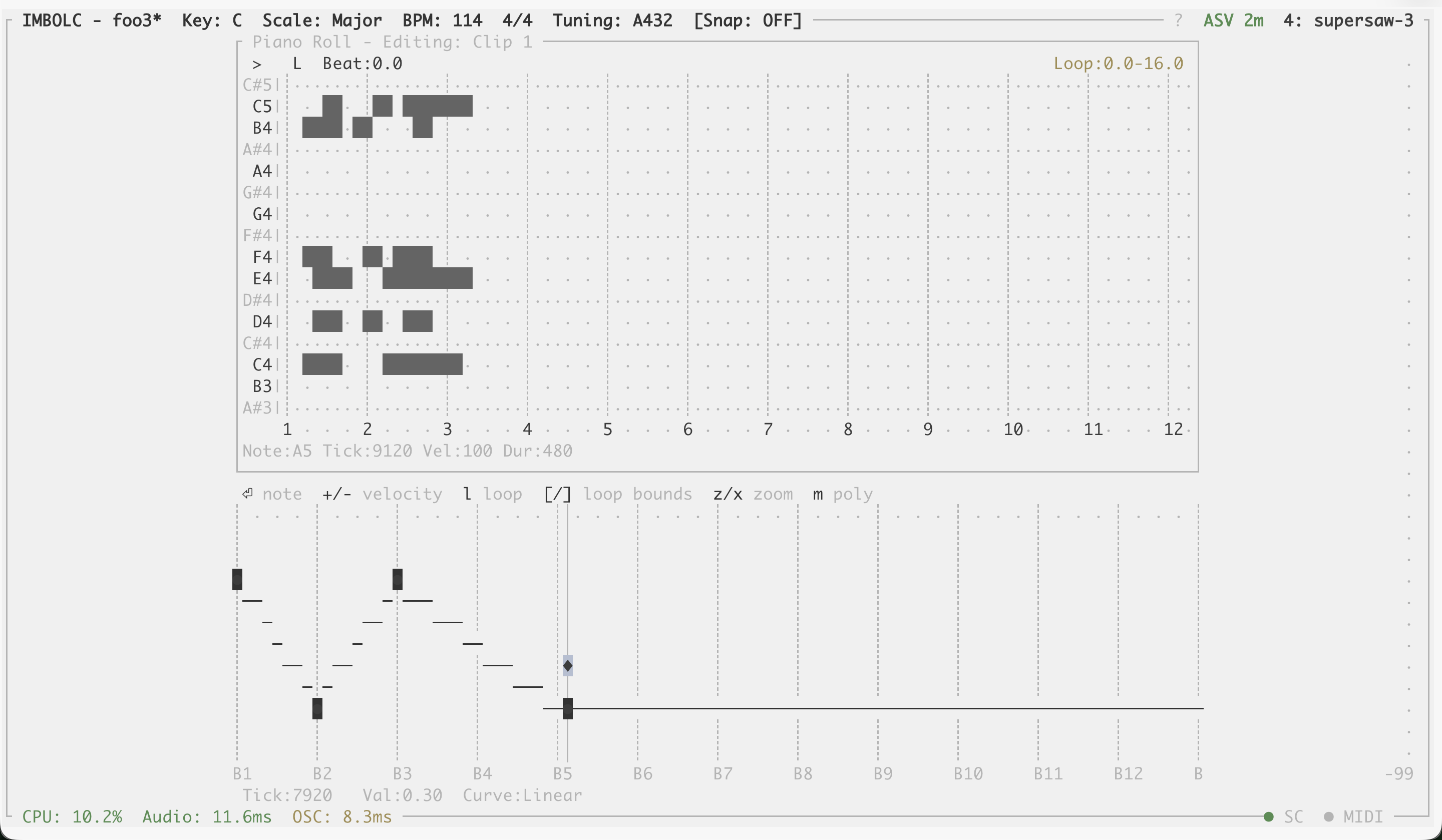
Real production session running in the terminal.
Features
Sound Design
- 58 built-in instruments — oscillators, FM synthesis, physical models, drums, classic synths, samplers, and more
- 39 built-in effects — delays, reverbs, compressors, modulation, distortion, granular, spectral, and more
- Semi-modular signal chain — per-track source → LFO → effects → EQ → mixer with bus routing
- Powered by SuperCollider — professional-grade DSP with custom synthdefs
Sequencing
- Piano roll and drum sequencer — per-note velocity and probability, variable grid resolution, per-pad groove and humanize
- Automation — automate any parameter with drawable lanes
- Arpeggiator — arpeggiate chords with configurable patterns
Studio
- Mixer with up to 128 buses — per-track levels, pan, mute/solo, sends, and master control
- Real-time LAN collaboration — multiple players on a shared session over your local network
- Record and export — capture your session and export to WAV
- SQLite project files — plain databases you can query, edit, and share
Does your DAW have
- Stradella bass keyboard — full accordion layout with automatic chord voicing across a circle-of-fifths grid
- Just intonation — 5 tuning systems with 3 JI flavors (5-limit, 7-limit, Pythagorean)
- Generative composition — Euclidean rhythms, Markov chains, and L-systems with macro controls for density, chaos, energy, and motion
- Full text-mode REPL with 236 commands — screen-reader friendly, scriptable, works over SSH
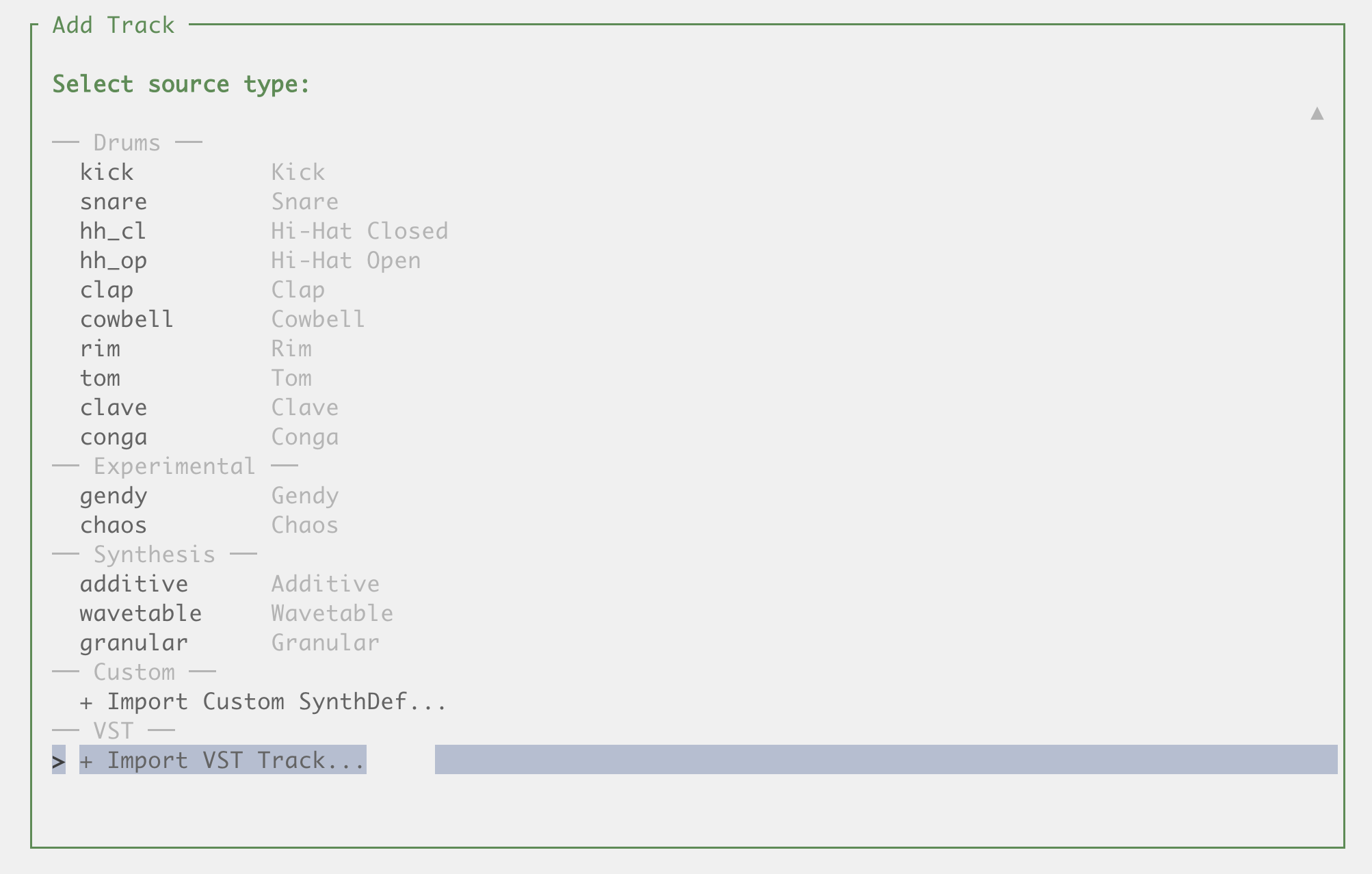
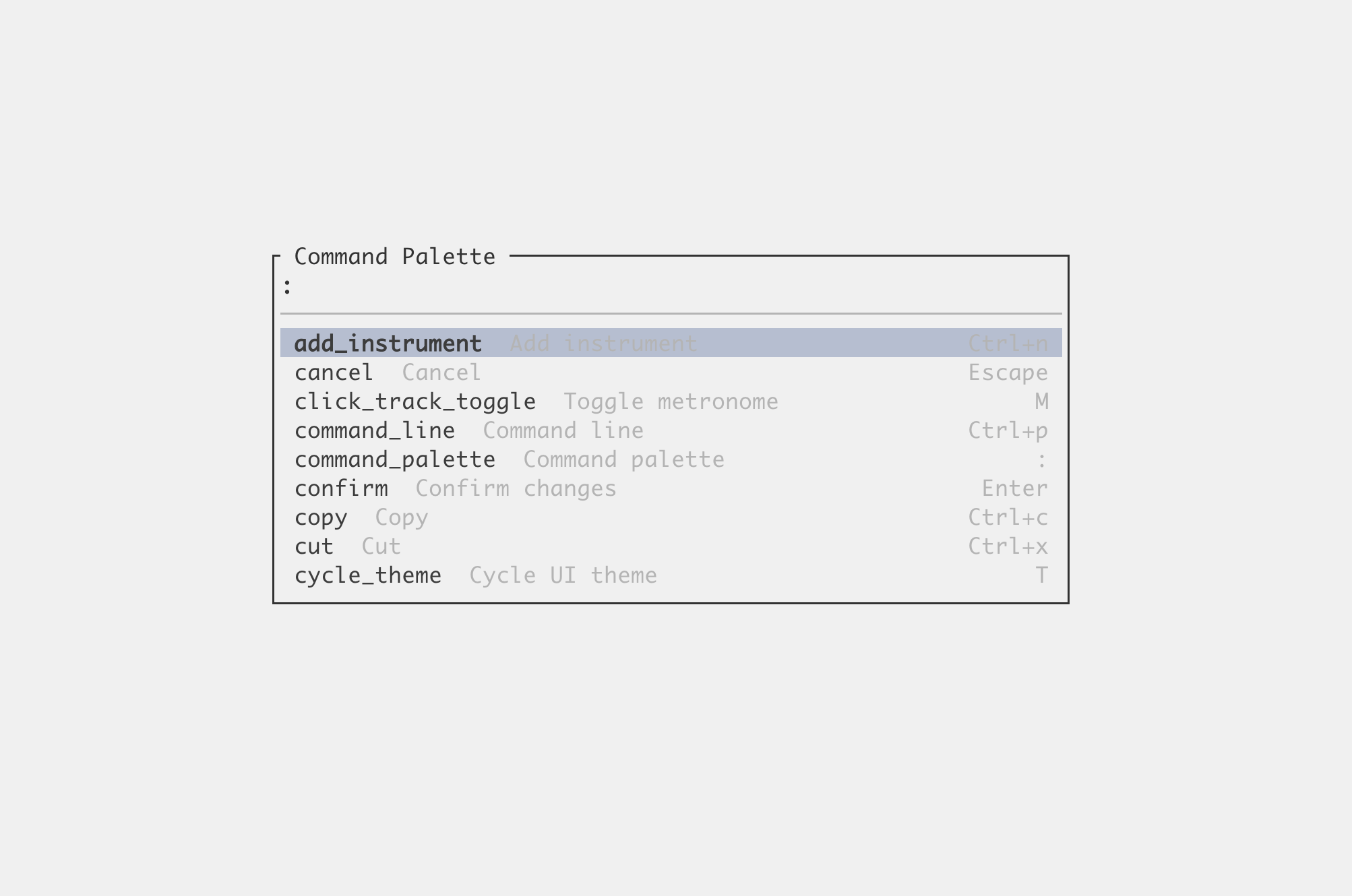
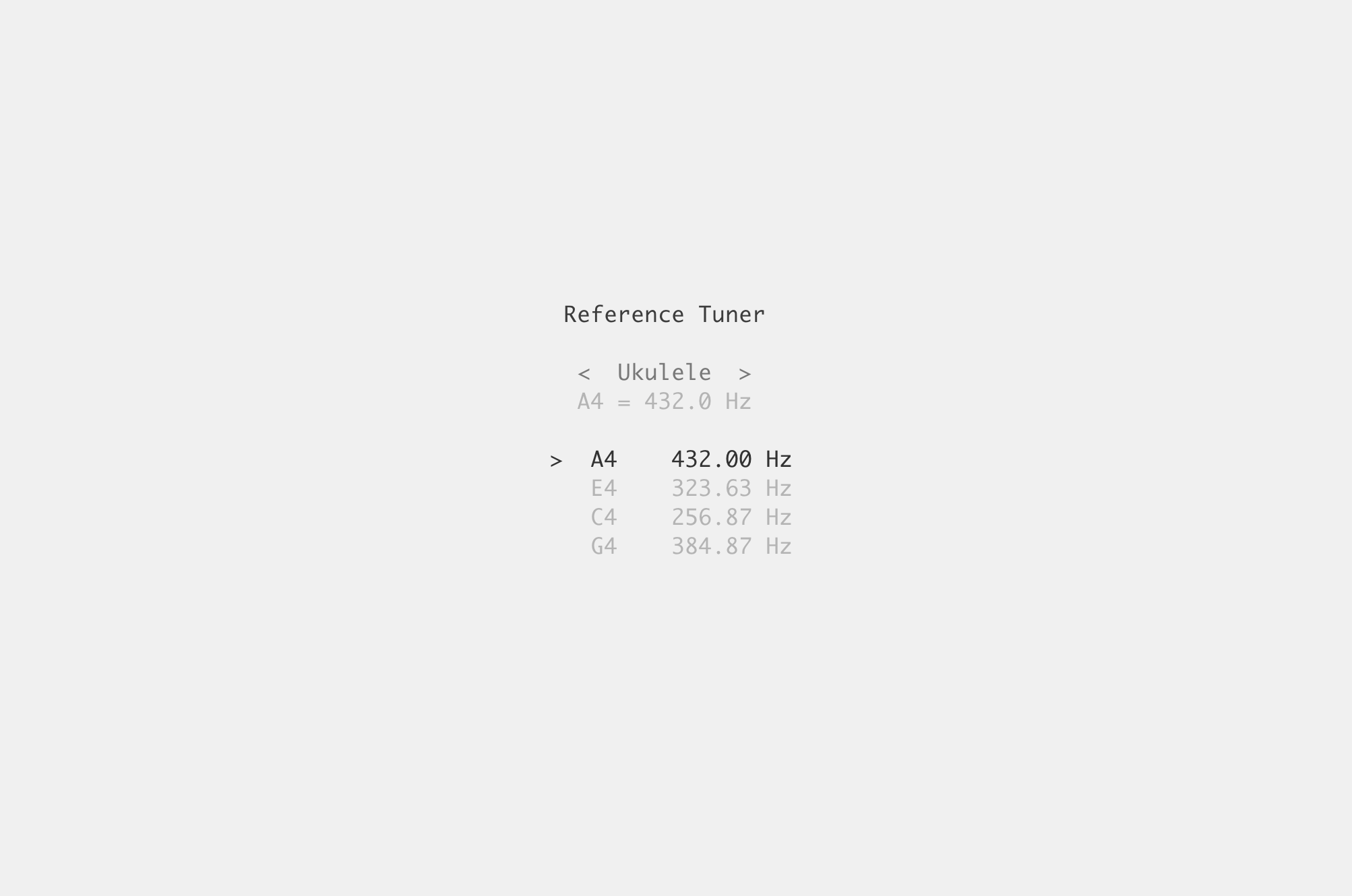
Screenshots
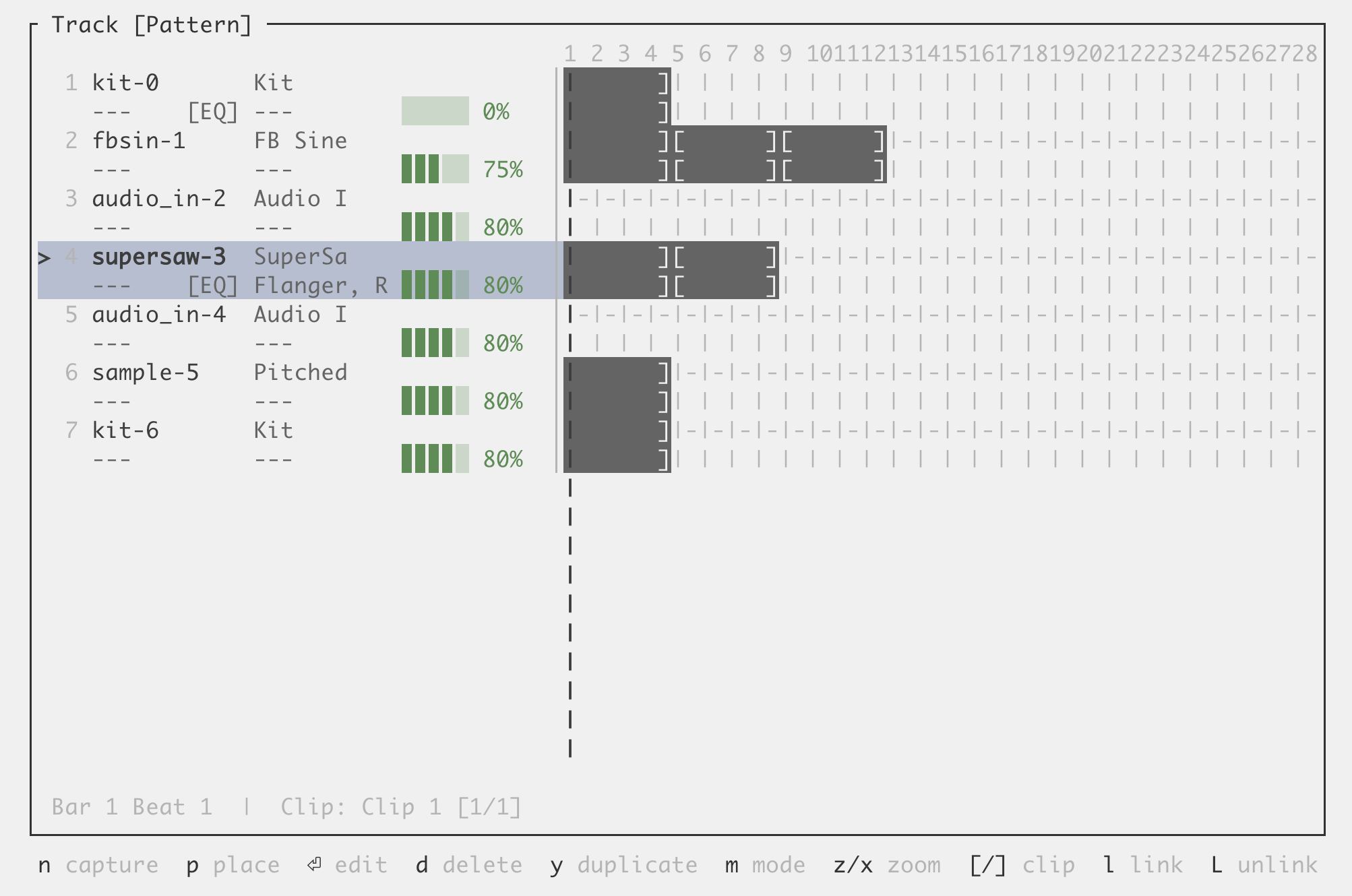
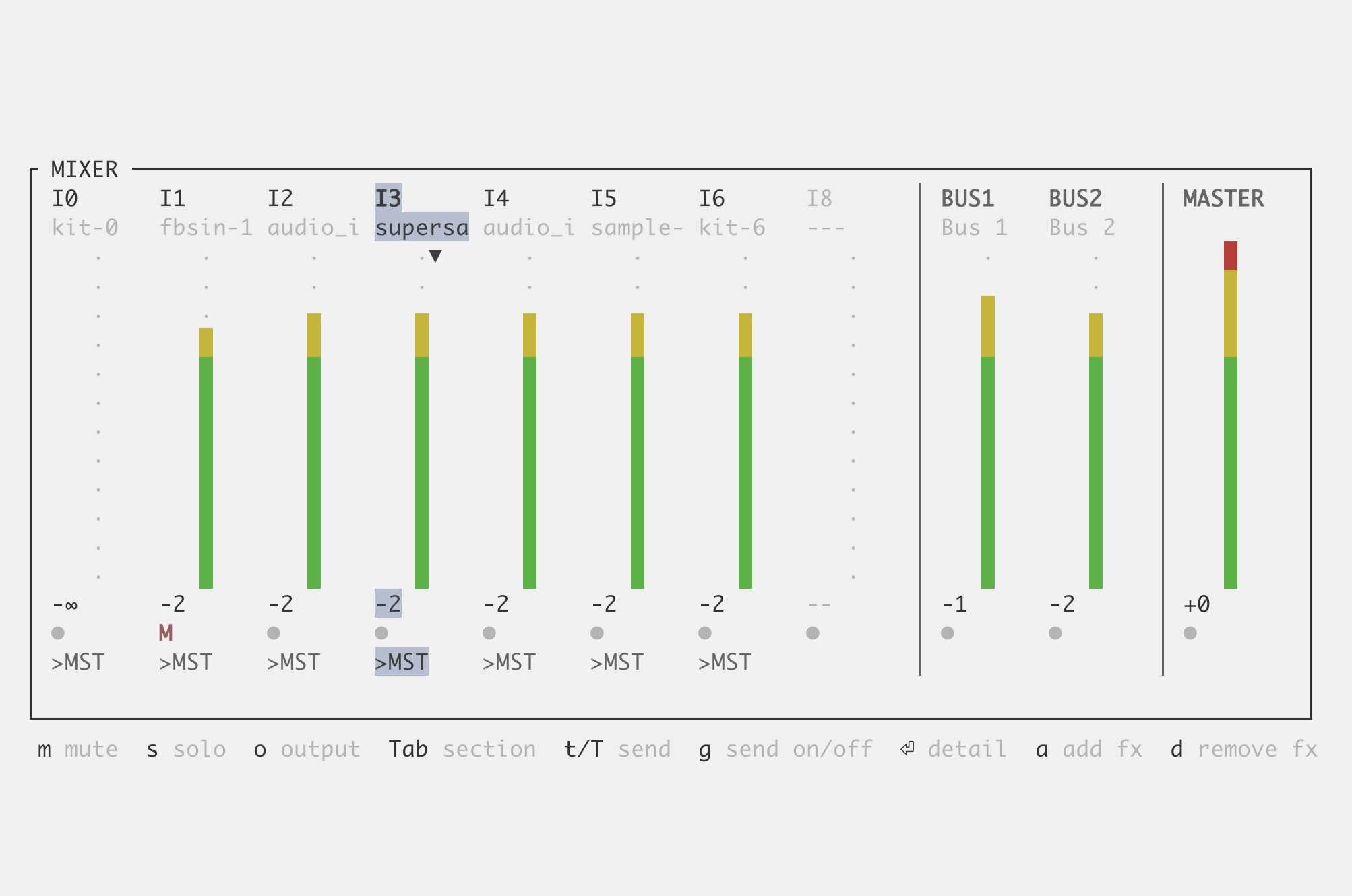
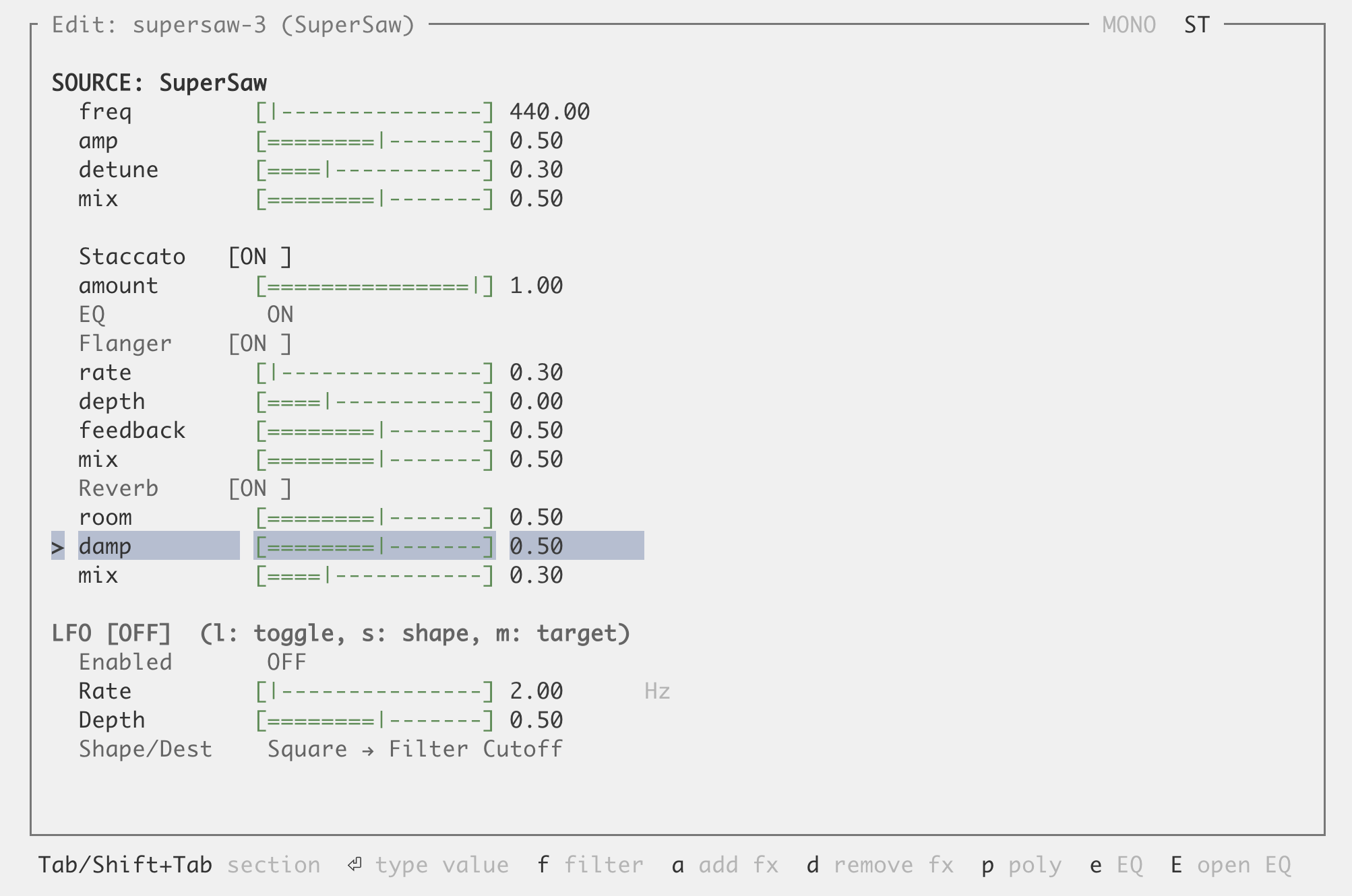
Philosophy
The act of making music has a fundamentally different effect on us than listening to it. Making engages us — it demands presence, vulnerability, and participation. It connects us to something larger. And yet, for most of modern history, cultural and economic forces have pushed people away from making and toward consuming.
Music-making is not a product. It is a practice — like meditation, like prayer, like tending a garden. Its value is not determined by whether anyone else hears it, whether it meets a standard of technical proficiency, or whether it can be sold. The value is in the act itself: the focused attention, the embodied listening, the dialogue between intention and sound.
Many traditions understand what Western culture has largely forgotten: that sound and music are technologies of healing and spiritual connection. Chant, drumming, drone, repetition, harmonic resonance — these are not aesthetic choices. They are practices with physiological and psychological effects.
Accessibility over professionalism
The interface should invite exploration, not gatekeep with complexity. A person who has never made music before should be able to sit down and begin shaping sound within minutes.
Process over product
Features that support the experience of making — live manipulation, improvisation, embodied interaction — matter as much as features that produce a polished result.
Presence over productivity
The tool should encourage focus and immersion, not optimization and efficiency metrics. No AI autocomplete. No algorithmic suggestions. The human is the author.
Openness over enclosure
Free software, open formats, local-first data. Your creative practice should not depend on a subscription, a corporation's continued existence, or an internet connection.
Imbolc is the Celtic festival marking the midpoint between winter solstice and spring equinox — the first stirring of life beneath frozen ground. It is associated with Brigid, goddess of poetry, smithcraft, and healing. It represents the moment when what has been gestating in darkness begins its movement toward the light.
This is what making music feels like when you let go of the need for it to be anything other than what it is.
Quick Start
- Install Rust and SuperCollider (
scsynthmust be on your PATH) - Compile SynthDefs:
imbolc-core/bin/compile-synthdefs - Run:
cargo run -p imbolc-ui --release
Works in any modern terminal. For the best experience (enhanced piano keyboard), use Kitty or Ghostty.
Support Imbolc
Imbolc is built by one person, in the open, with no venture capital or corporate backing. If it's useful to you, sponsorship helps keep development going.